


How to Optimize Your Website for AI Search (Before Your Competitors Do)
I was at a marketing meetup in early spring when a colleague mentioned her agency had seen Google referrals decline over six months while traffic from ChatGPT and Perplexity was increasing on the same dashboard. Nobody in the room seemed surprised, which told me this shift is further along than most website owners realize.
In February 2024, Gartner predicted that traditional search engine volume is expected to drop by 25% by 2026, mostly because people are turning to AI chatbots and virtual agents instead of typing queries into Google. That's not a small shift. If your site is still optimizing purely for the old-school "ten blue links" model, you're building for a search engine that's already changing shape under your feet. This is exactly the gap that working with the best digital marketing company can close, because AI search optimization is becoming an increasingly important part of a broader SEO strategy.
What Is AI Search Optimization?
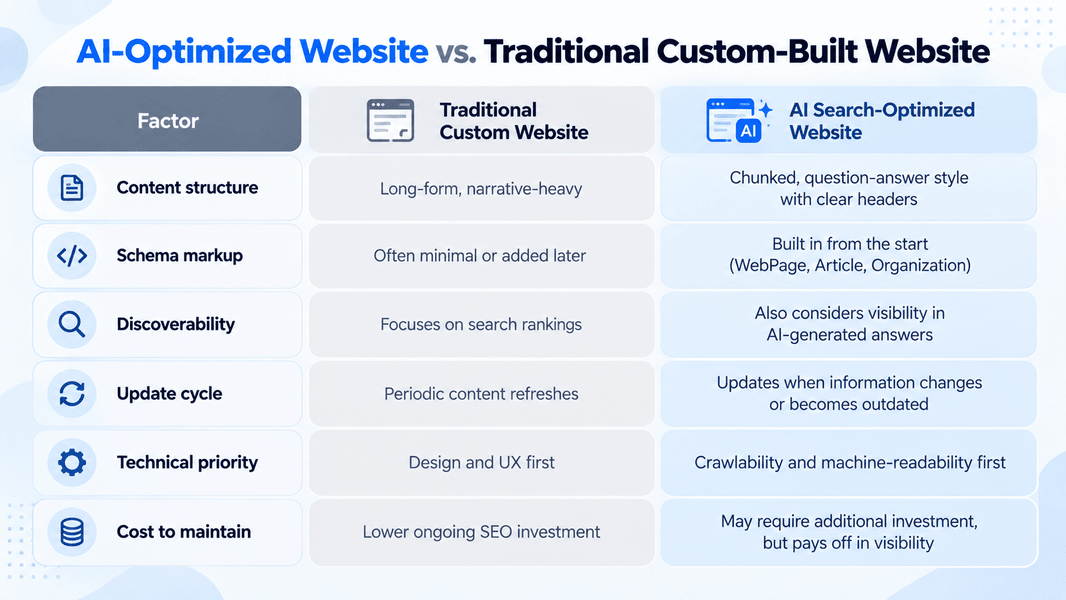
AI search optimization is about arranging your website content for AI-powered search tools to understand it, extract it and quote it directly in their responses. It integrates with traditional SEO but emphasizes clear, valuable content for AI generated results.
What it typically includes:
- Clear, direct answers to particular inquiries that appear at the top of a page
- Structured data (schema markup) to notify machines what content is about
- Content structured in scannable formats: lists, tables, defined headers
- Strong thematic covering demonstrating expertise and providing useful information
- Fast, accessible pages that AI crawlers can really get to
Why Businesses Are Choosing to Invest in This Now
- Being cited in an AI answer builds trust before a user even clicks through
- It helps prepare your website for increasingly conversational search experiences
- AI-friendly content tends to be clearer, which improves regular SEO too
- It reduces dependency on paid ads in a shrinking organic click environment
- Early movers get more time to build useful content, brand recognition, and topical coverage as AI search evolves
Core Areas to Focus On
Structured Data Is No Longer Optional
Schema markup used to be a nice-to-have for rich snippets. Now, it provides structured context that helps AI systems understand your page.
- Add Organization, WebPage, and Article schemas as a baseline
- Use Product schema if you sell anything online
- Keep schema updated whenever page content changes
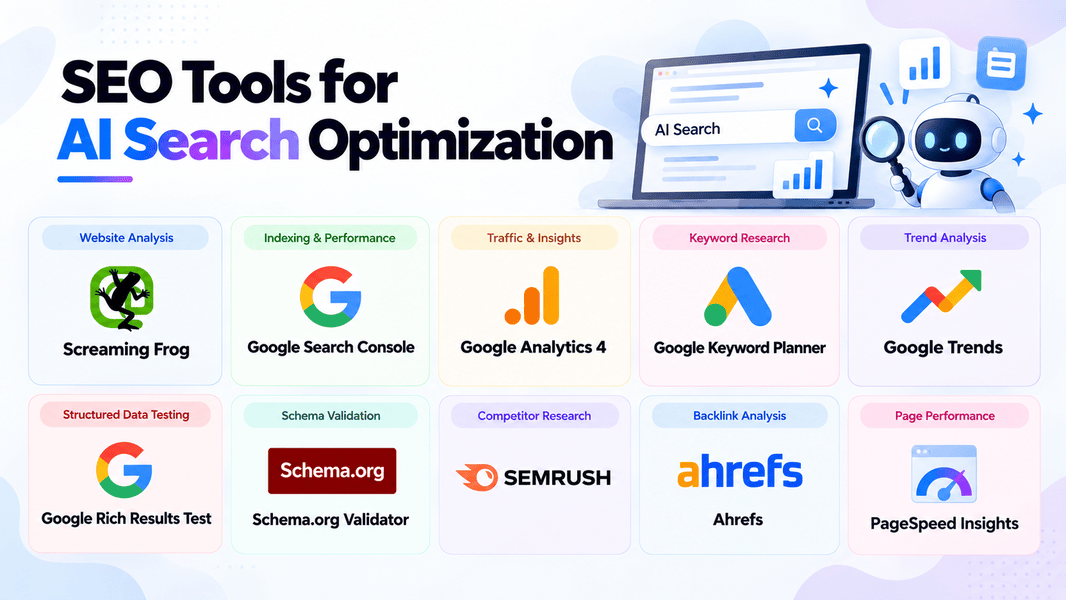
- Test regularly with Google's Rich Results tool
Content That Answers Before It Sells
AI tools pull the clearest, most direct answer available — not the most persuasive paragraph.
- Open sections with a direct answer, then expand with context
- Avoid burying the point under paragraphs of preamble
- Use numbered steps and bullet lists wherever a process is involved
Mittal Technologies Insight: Pages that answer clear, fact-based questions within their niche are easier for AI systems to understand and potentially surface in generated summaries. Depth still matters, but clarity and focus make information easier to process.
Topical Authority and E-E-A-T Signals
AI models weigh credibility heavily, and that's built over time, not overnight.
- Publish author bios with real credentials
- Link out to credible, named sources when citing data
- Keep an updated "last reviewed" date on important pages
- Build clusters of related content around your core services
Where This Gets Genuinely Hard
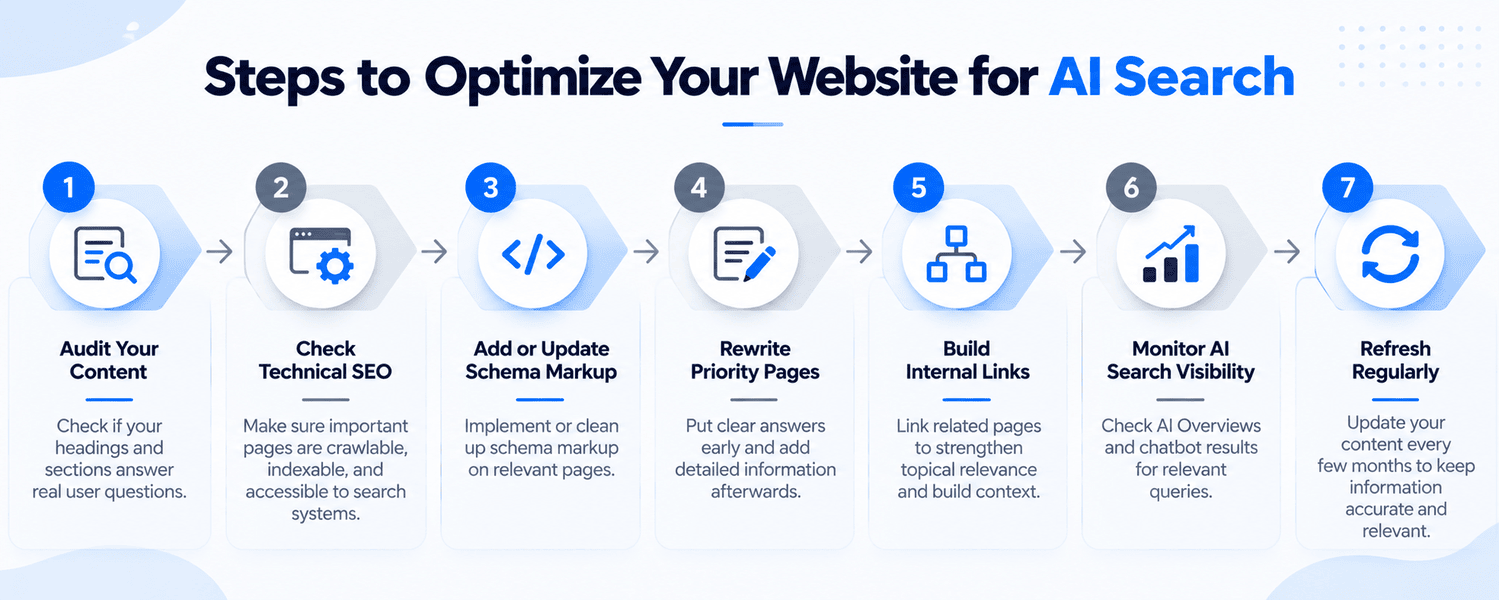
This isn't a plug-and-play checklist.
- Limited tracking tools — there is not currently a perfect analytics suite for AI citation tracking. Best practice: Use tools like Semrush's AI visibility tracking plus manual spot checks until better solutions are available.
- Inconsistent AI behavior — the same question can get different replies on different days. Best Practice: be reliably accurate, not chasing the oddities of a single platform
- Content cannibalization risk — chunking content for artificial intelligence can break up thematic depth. Best Practice: Create a comprehensive parent page to nest brief answer parts.
- Schema errors going unnoticed — a simple markup mistake might subtly impact visibility for months. Best Practice: quarterly audit schema, not just upon launch.
- Overcorrection — “optimizing for AI” by removing any narrative text damages the human reading experience. Best Practice: write for people first, for machines second.
What's Likely Coming Next
- AI Overviews expanding into local and transactional search queries
- As assistants get better, voice search and AI search behavior are coming together
- Marketers’ more granular citation tracking tools now available
- Increased weight on first-party data as AI models avoid recycled content
- Multimodal search is growing, with AI systems understanding images, screenshots, and text together
- Possible standardization around AI-specific meta tags, similar to robots.txt
Wrapping Up
AI search isn't replacing traditional SEO, but it's reshaping how visibility gets earned, and businesses that start adapting their content now will be better prepared as AI-powered search continues to evolve. If you're not sure where your site stands on any of this, it's worth a proper look before your competitors get there first — get in touch with our team and we'll walk you through what needs fixing.
FAQs
1. How is AI search optimization different from normal SEO?
It overlaps a lot but it is not the same. Traditional SEO is about ranking in results, but AI search optimization is about having your material recognized and cited directly by AI technologies, which depends more on clarity and trust signals.
2. Do I need to rewrite my whole site to optimize for AI search?
Not normally. It’s not a total rebuild, just content rearrangement, schema markup, and technical accessibility adjustments for the most part.
3. How long does it take to see results from AI search optimization?
There is no fixed timeline. Results can vary depending on your website’s content quality, technical health, and authority, but most businesses notice shifts in visibility within a few months of consistent updates, similar to how our best SEO services engagements typically progress.
4. Can small businesses compete in AI search?
Yes. AI platforms are more likely to reward responses that are clear and well-structured rather than a large volume of material or ad expenditure, so smaller firms can enhance their visibility by focusing on specific queries, demonstrating real expertise, and posting relevant content for their target audience.
5. What's the biggest mistake businesses make with AI search optimization?
Treating it like a one-off, rather than an ongoing process. Review and update critical pages as information changes and adapt your overall content strategy as search technologies evolve.