


How to Choose the Right Website Development Company for Your Business
A few years ago, a shopkeeper could survive purely on foot traffic and word of mouth. That's changing fast. Clutch.co's 2025 small business research found that 83% of small businesses now operate a website, up sharply from 64% back in 2018, and the businesses without one are increasingly outliers rather than the norm. The same data ties websites directly to revenue growth, not just visibility.
So, the real question for most owners isn't "do I need a website." It's "who do I trust to build it properly." If you're comparing options for a website development company Ludhiana businesses can actually depend on, this is meant to walk you through that decision without the sales pitch.
What Is Website Development, Exactly?
Website development is the process of planning, designing, coding, and maintaining a functional website, not just the visual layer people see, but everything running underneath it. A proper web development in Ludhiana engagement usually covers:
- Front-end work: layout, navigation, responsiveness across devices
- Back-end systems: databases, server logic, forms, authentication
- Content structure: how pages, categories, and blog posts are organized
- Performance and security: load speed, SSL, backups, malware protection
- Integrations: payment gateways, CRMs, booking tools, analytics
- Ongoing support: updates, bug fixes, and scaling as traffic grows
Think of it less as "building a webpage" and more as constructing a small piece of digital infrastructure your business will lean on for years.
Why Businesses Actually Invest in Proper Development
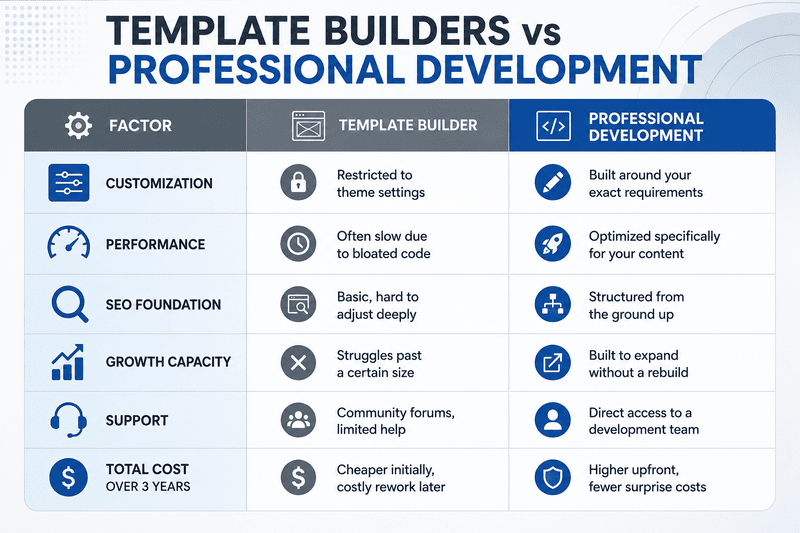
Plenty of owners start with a free template because it's cheap and fast. Nothing wrong with that for testing an idea. But businesses that eventually move to structured development usually do it for concrete reasons:
- They want a site that reflects their actual brand, not a recycled theme thousands of other businesses are also using
- They need pages that load fast, since Google's Core Web Vitals directly affect ranking
- They're planning to scale, add products, or expand into new service areas
- They've had security scares with cheap hosting or outdated plugins
- They want analytics and tracking that actually tell them something useful
The Pieces That Actually Matter
User Experience and Design
Design isn't decoration. It's whether someone can find your pricing page in ten seconds or gives up and calls a competitor instead.
- Navigation that stays consistent across every page
- Mobile-first layouts, since most browsing in India now happens on phones
- Visual hierarchy that draws attention to the actions you actually want people to take
- Load times under three seconds wherever possible
- Accessible design, including readable contrast and keyboard navigation
- Restraint. Not every page needs five call-to-action buttons
Mittal Technologies Insight: Owners often ask us to add "just one more section" to the homepage. We usually push back gently. A homepage trying to cover everything ends up communicating nothing clearly, and visitors bounce before they scroll far enough to see it.
Technical Foundation
This is the invisible layer, but it's the part that decides whether your site survives a traffic spike or a security probe.
- Clean, crawlable code structure for search engines
- Hosting that doesn't buckle under moderate traffic increases
- SSL certificates and routine security patching
- Database architecture that doesn't slow down as content grows
- API connections to tools you already rely on
- Backups that get tested occasionally, not just configured once and forgotten
Content and CMS Setup
A beautiful site with no content plan turns stale within months, and stale sites rank poorly.
- A CMS your own team can use without a developer on standby
- Organized structure for services, case studies, and blog posts
- Clear, specific calls-to-action on every important page
- Metadata and heading structure set up correctly before launch, not patched in later
- A rough content calendar for at least the first quarter after going live
How the Development Process Actually Works
- Discovery — Understanding the business, competitors, and what the site genuinely needs to accomplish, not a generic checklist.
- Sitemap and wireframes — Rough page structure and layout logic before anyone touches design software.
- Design — Translating wireframes into an actual visual identity aligned with the brand.
- Development — Front-end and back-end build, plus integrations with your existing tools.
- Content population — Real copy and images going in, not lorem ipsum placeholder text.
- QA and testing — Cross-browser, cross-device checks, broken link audits, form testing.
- Launch and monitoring — Going live, then watching analytics closely for the first few weeks to catch issues early.
Where Website Projects Actually Go Wrong
Challenge: Scope creep mid-build. Best Practice: Lock requirements before development begins. Treat anything added mid-project as a separate, scoped addition, not a favor.
Challenge: Sites that look sharp but load painfully slow. Best Practice: Compress images, defer non-critical scripts, and test with PageSpeed Insights before launch, not after complaints start.
Challenge: Nobody internally knows how to update the site. Best Practice: Get at least one team member trained on the CMS before the developer disappears post-launch.
Challenge: SEO bolted on as an afterthought. Best Practice: Build title tags, alt text, and clean URLs into development itself, not as a rushed patch three months later.
Challenge: Vague budgets and timelines. Best Practice: Insist on a written scope with milestones. A single lump-sum number with no breakdown is a red flag.
None of this is exotic advice. Most website failures trace back to skipped planning conversations, not bad developers.
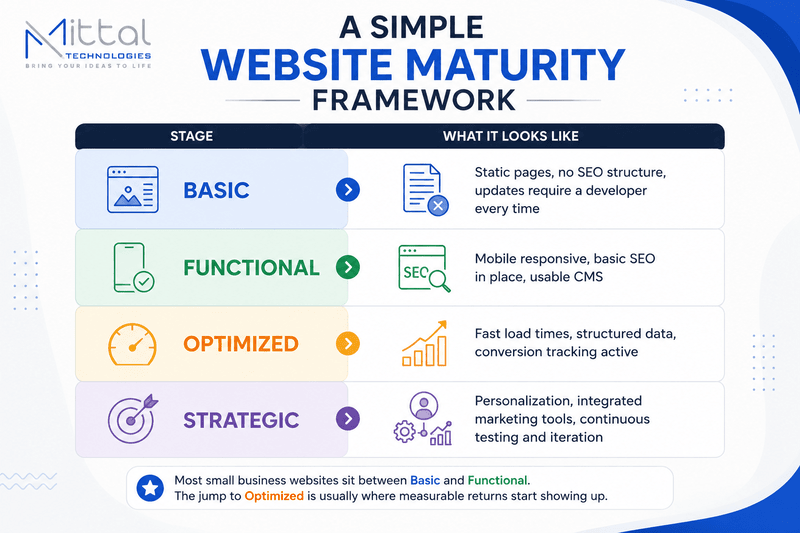
Measuring Whether It's Actually Working
Business KPIs
- Inquiry or lead volume generated through the site
- Conversion rate on service or product pages
- Customer acquisition cost through organic channels
- Return visitor percentage
Technical KPIs
- Core Web Vitals scores
- Mobile usability rating
- Organic keyword rankings over time
- Uptime percentage
If you want a concrete example of what these numbers look like in a real project, the SimplyFin case study breaks down how a custom build translated into measurable outcomes.
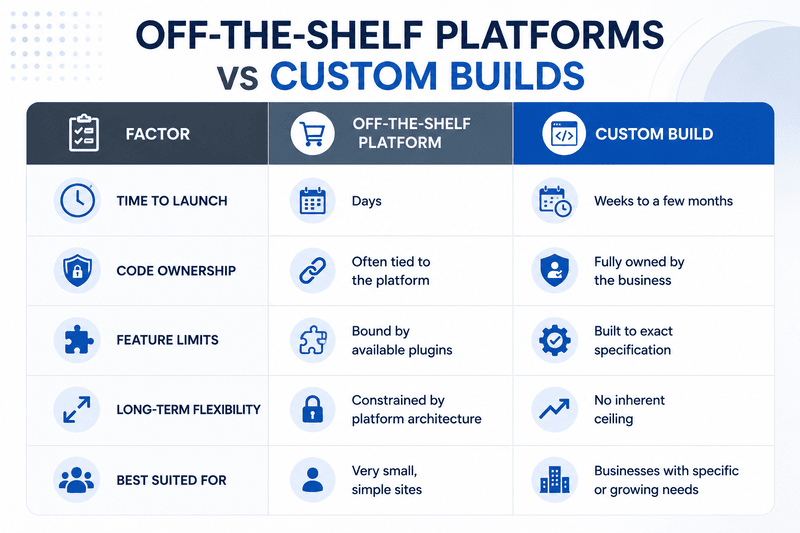
What's Shifting in Website Development Right Now
- AI-driven personalization moving from premium feature to baseline expectation
- Voice search optimization becoming more relevant as smart assistant use grows
- Google tightening Core Web Vitals thresholds over time
- Headless CMS setups gaining traction for faster, more flexible front-ends
- Accessibility compliance getting more attention, partly due to legal exposure
- Lighter, more efficient web design driven by both speed and sustainability concerns
It's worth being honest here too: not every business needs to chase every trend immediately. A local service business doesn't need a headless CMS on day one. Match the investment to where you actually are.
Final Thoughts
A website isn't a one-time purchase, it's ongoing infrastructure that shapes how people discover, evaluate, and choose your business. The businesses seeing real returns treated development as a deliberate decision rather than a box to tick off quickly. If you're weighing options for a website developer Ludhiana businesses trust for long-term work, it's worth a direct conversation before you commit. You're welcome to reach out to the team whenever you're ready to talk through specifics.
Frequently Asked Questions
1. How long does a typical business website take to build?
Most custom projects run 4 to 10 weeks depending on complexity, how quickly content is ready, and the number of revision rounds involved.
2. Is a template ever good enough?
For very simple, low-traffic use cases, sure. Once SEO, brand differentiation, or specific functionality matter, custom development tends to pay for itself.
3. What's the most common mistake businesses make?
Choosing purely on price without checking a developer's past work, communication habits, or what post-launch support actually includes.
4. Does the site rank on Google automatically once it's live?
No. Launch is the starting line, not the finish line. Rankings build over time through content, technical maintenance, and consistent effort.
5. Who should I talk to about starting a project?
You can look into the team's background or reach out directly at Mittal Technologies to discuss what you need.