


Best Web Design & Development Company in Ludhiana: What a Real Partner Looks Like
Deloitte and Google's "Milliseconds Make Millions" study (2020) found that a 0.1-second faster mobile site lifted retail conversions by 8.4%. A tiny gain, with real money attached. Still, when owners start searching for the best web design & development company in Ludhiana, they compare portfolios and quotes and rarely ask who will still be picking up the phone six months after launch. That gap is where most website projects quietly go wrong. This guide covers what to check, and what a proper partnership should include.
What Is Web Design and Development?
Design is how a site looks and feels to a visitor. Development is how it works underneath. A good web development company handles both so they don't pull in different directions.
The work usually covers:
- Layout, branding and user-flow design
- Front-end and back-end coding
- Mobile-first, responsive builds
- CMS or e-commerce setup
- Speed, security and on-page SEO foundations
- Hosting, maintenance and post-launch fixes
Why Businesses Hire a Web Design and Development Company
Most clients I've spoken to don't want "a website." They want something specific:
- More enquiry calls and form fills from Google
- A site that loads quickly on a mid-range phone and patchy 4G
- A brand that looks as serious online as it does in person
- A site their own team can update without a developer on speed dial
- A foundation that won't need rebuilding in two years
What a Web Design Agency Should Show You Before You Sign
Ludhiana has plenty of choice, from solo freelancers to full teams. A reliable web design agency should be able to show you:
- Live client sites you can open on your own phone, not just screenshots
- PageSpeed or Core Web Vitals scores for those sites
- A named project manager, so you know who answers
- A written scope covering revisions, timelines and ownership
- Experience in your sector, whether that's hosiery, machine parts, education or services
- Clear terms for support, backups and security patches after launch
Mittal Technologies Insight: Ask any agency to open a project it delivered a year ago and show how it performs now. Careful builds age well. Rushed ones start cracking within months.
Responsive Web Design Services That Go Beyond Shrinking the Layout
Most local-business traffic arrives on phones, so responsive design is the baseline. Even so, "responsive" often just means the page squeezes down. Proper responsive website design services include:
- Tap-friendly buttons and click-to-call on mobile
- Forms trimmed to the fields you actually need
- Images compressed and sized for each screen
- Navigation that works with one thumb
- Content ordered by what visitors want first
- Testing on real devices, not only browser emulators
Life After Launch: Reviews, Maintenance and Reporting
This is the part most agencies skip, and the part I'd weigh most heavily. A launched site is a starting line. Look for:
- A scheduled review at 30 days, then quarterly
- Uptime, security and plugin updates handled on a calendar
- A gap analysis against your goals, not just a bug list
- Plain-language reports on traffic, enquiries and speed
- Changes prioritised by analytics, not by whoever shouts loudest
- A single contact who knows your site's history
Mittal Technologies Insight: If a quote has no line for post-launch support, the work isn't finished at handover. Ask what the first three months look like in writing.
Why Design, Development and SEO Work Better Under One Roof
When design, code and search sit with separate vendors, nobody owns the outcome. Headings get picked for looks, pages get built without keyword research, and the SEO fixes arrive after launch, when they cost more. A single team can plan site structure, speed, schema and content together. That is why our Ludhiana team works alongside SEO and social media specialists from the first wireframe.
How a Web Project Should Run
- Discovery call to define goals, audience and priority pages.
- Sitemap and wireframes before colours or fonts.
- Design mockups for desktop and mobile, reviewed together.
- Development on a staging site so nothing goes live half-finished.
- Testing for speed, forms, browsers and broken links.
- Launch with redirects, analytics and Search Console configured.
- A 30-day review to fix whatever real users expose.
Challenges You Should Expect
- Scope creep. Best Practice: freeze the scope in writing and price extra requests separately.
- Late content from the client side. Best Practice: set copy and image deadlines on day one, because late content delays more launches than bad code.
- Cheap hosting dragging speed down. Best Practice: agree hosting specs upfront and test server response before launch.
- Design that ignores SEO. Best Practice: involve SEO at the wireframe stage, not after.
- Plugin overload and security gaps. Best Practice: install only what you need, update on schedule, and keep backups off the server.
- Nobody owns the site after handover. Best Practice: get admin access, documentation and a support arrangement before the final payment.
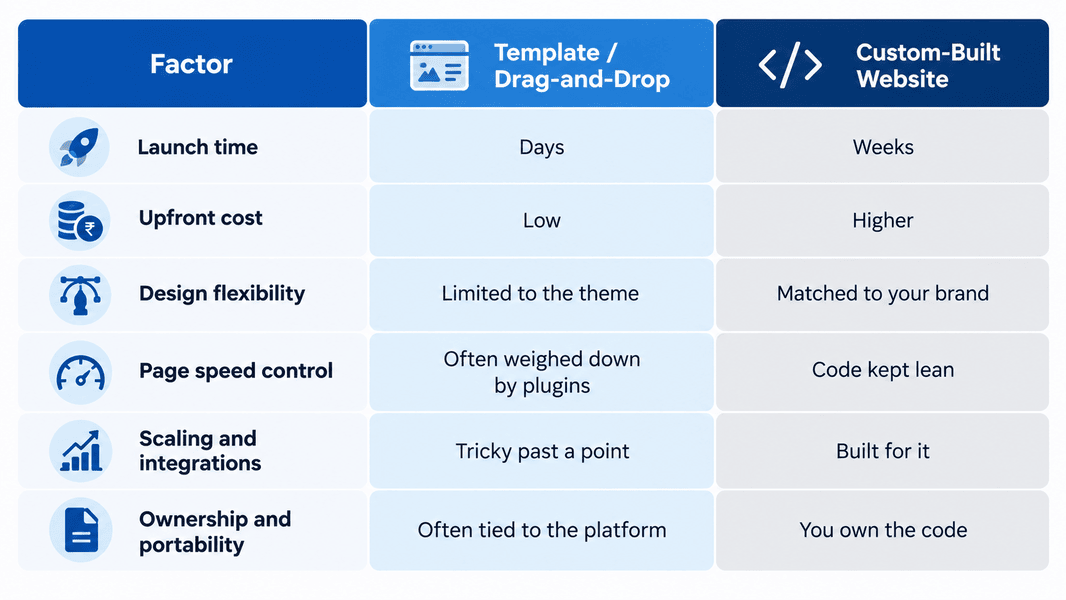
A custom build isn't always the sensible call. If you're still testing a business idea, a lean template site costs a fraction and teaches you more. A reputable agency will say so, even if it means a smaller invoice.
Tools Commonly Used in Modern Builds
- Figma: design and prototyping
- GitHub Copilot: code assistance, always reviewed by a developer
- Google PageSpeed Insights and Lighthouse: performance and accessibility checks
- WordPress, Shopify or custom frameworks: chosen to fit the business
- Google Search Console: indexing and search performance after launch
AI speeds up routine work. Judgement on structure, copy and conversion still comes from experienced people.
Where Web Development Is Heading
- Lighter, faster sites as Core Web Vitals expectations tighten
- AI chat and search features built into business sites
- Structured data written for AI-generated answers as well as classic results
- Higher accessibility standards
- More headless, API-driven builds for businesses that outgrow one platform
Final Word
A website works like a salesperson who never takes a day off, and the team behind it decides how well it sells. If you're shortlisting agencies and want a straight opinion on scope or budget, talk to our team and we'll go through your requirements with you.
FAQs
1. How do I choose a web design and development company in Ludhiana?
Check live client sites, page speed scores, written scope terms and post-launch support. Referrals from business owners in your own sector help too.
2. How long does a business website take to build?
A small brochure site often takes two to four weeks. Larger custom builds with e-commerce or integrations take longer, usually depending on how fast content and feedback arrive.
3. What does responsive website design mean?
It means the site adapts properly to phones, tablets and desktops, with layout, images and navigation adjusted for each screen rather than simply shrunk.
4. Do I need a custom website or a template?
Templates suit simple, early-stage sites. Custom builds make sense when you need speed control, integrations or room to scale.
5. Will my website be ready for SEO?
It should be. Clean code, fast loading, proper headings and mobile-friendly design should be part of the build, not an afterthought.